A slab leak is a break in a water line that runs beneath your home's concrete foundation. The pipe is buried in or under the slab, so the water has nowhere obvious to go. It saturates the ground beneath the concrete, wicks up through the slab, and pushes into your flooring, baseboards, and walls from below. You feel the effects long before you ever see the pipe.
The classic first clue is a warm spot on the floor from a leaking hot-water line, or a hot side that never quite keeps up because pressurized water is escaping under the house. Others notice the water bill climb, hear water running with every tap closed, or find baseboards and flooring going damp along one wall for no visible reason. Left alone, a slab leak can undermine flooring across a whole room.
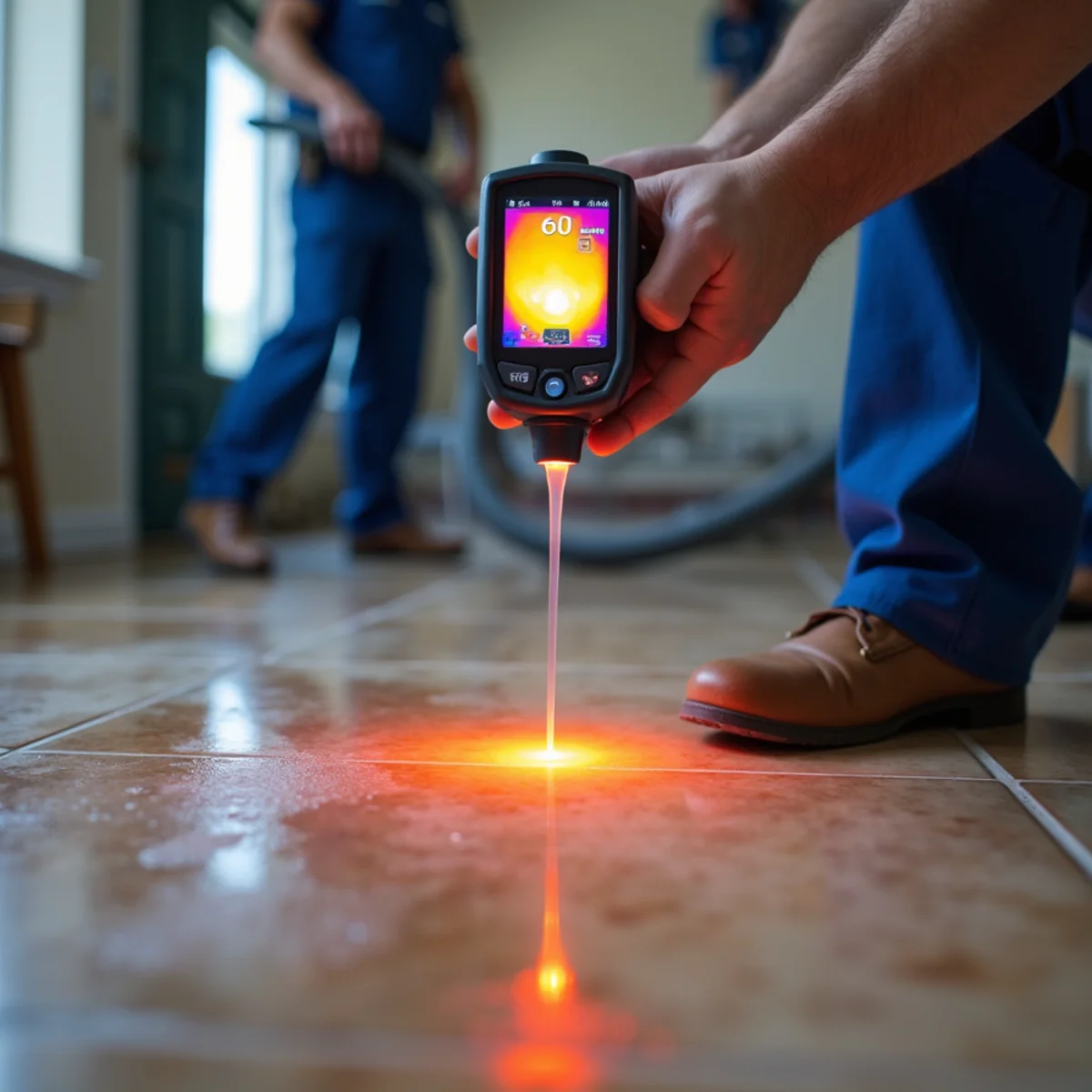
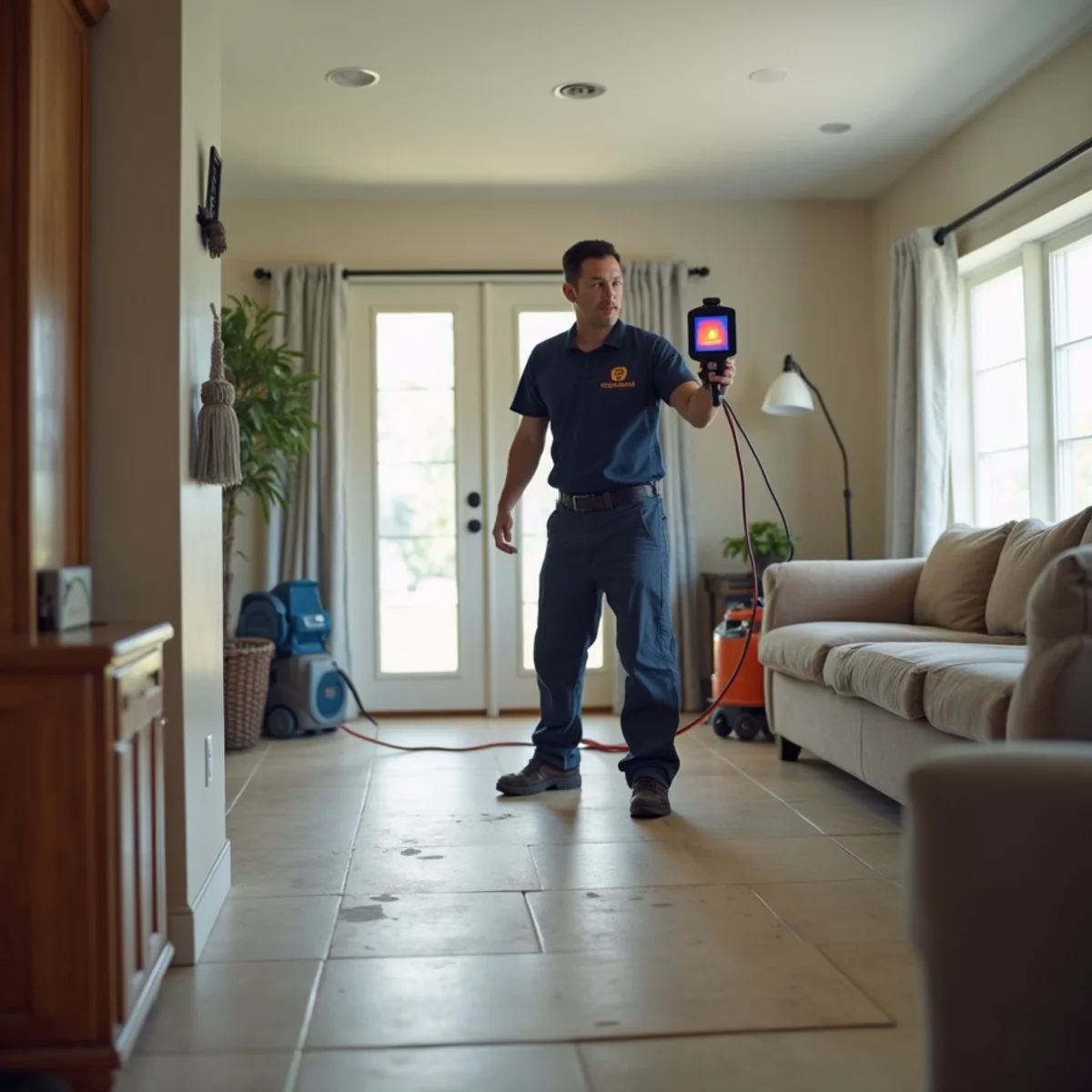
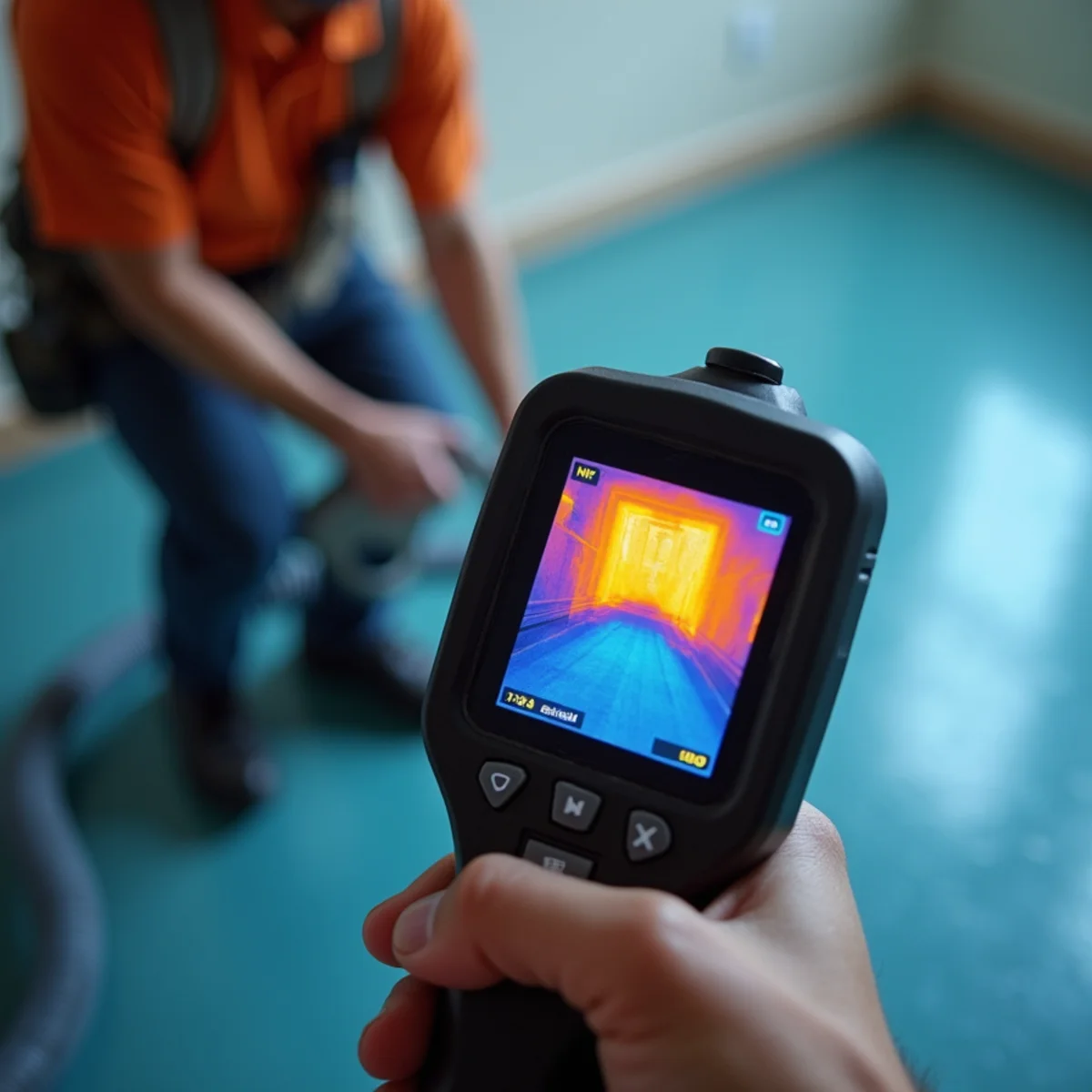
We handle the water damage side of a slab leak: finding where the water is surfacing, drying the slab and everything it wicked into, and restoring the flooring and walls once the pipe is repaired. This is demanding drying work, because concrete holds moisture and releases it slowly, and the water often spreads far beneath the surface. We use thermal imaging and moisture meters to map the true extent, and we are on call 24/7.
We are IICRC-certified in applied structural drying, licensed and insured, and locally owned. We document the loss thoroughly, coordinate with the plumber handling the pipe, and bill approved insurance claims directly.
Signs You Need Slab Leak Water Damage in Buena Park
Water damage rarely announces itself politely. Here's what tends to signal that it's time to call a professional:
- A warm or hot spot on the floor from a hot-water line leak
- The sound of running water when every fixture is off
- An unexplained jump in your monthly water bill
- Damp, warping, or lifting flooring along one wall or area
- Baseboards staying wet or a musty smell at floor level
- Cracks appearing in flooring, tile grout, or the slab
- Low hot-water pressure or a water heater that runs constantly
What's Included in Our Slab Leak Water Damage
Slab Leak Water Damage with us is a complete, done-for-you service — not a partial fix that leaves you chasing other contractors. Here's what a typical job includes:
- Extraction of water surfacing from the slab leak
- Drying of the concrete slab, subfloor, and lower walls
- Thermal imaging and moisture mapping across the slab
- Removal of flooring soaked from below the foundation
- In-place drying of hardwood where it is salvageable
- Antimicrobial treatment on the slab and affected framing
- The slab leak damage documented for your insurer
Why This Matters in Buena Park & North OC
Slab leaks are a defining problem for Buena Park because so much of the city was built the way postwar Southern California built: single-story tract homes poured on concrete slabs, with the copper supply lines run right in the slab. Fifty-plus years later, that copper is corroding and the fittings are failing, and the leak has no crawl space to drain into. It goes straight into the foundation and up into the house.
The same water chemistry and aging copper that cause pinhole leaks in the walls cause slab leaks under the floor, and in these homes the two problems often show up in the same decade. Because the water spreads sideways beneath the slab, a leak under a hallway can surface as damp flooring in a bedroom several feet away. In the ground-floor units of local condos and townhomes, a slab leak can affect shared flooring and structure, so we handle the drying and the documentation for multi-family situations too.
Our Slab Leak Water Damage Process
Here's how we handle the water damage from a slab leak, from mapping the moisture to drying the slab and restoring the floor.
- 1
Emergency Contact & Rapid Assessment
A real person answers your call 24/7 — never a voicemail. We ask a few quick questions to gauge severity, then dispatch a crew immediately. While you wait, we'll walk you through shutting off the water and safely documenting the damage for your insurer.
- 2
Water Extraction
Our technicians arrive with truck-mounted and portable extraction units to pull out standing water fast — the single biggest factor in limiting damage. We move furniture and belongings to dry areas and stop the spread before it reaches new rooms.
- 3
Drying & Dehumidification
We position industrial air movers and dehumidifiers to dry structural materials from the inside out, then monitor moisture daily with professional meters and thermal imaging so hidden dampness behind walls and under floors doesn't turn into mold.
- 4
Cleaning & Sanitizing
Every affected surface is cleaned with antimicrobial and anti-fungal treatments. For gray- and black-water losses we follow strict IICRC S500 containment, PPE, and disposal protocols to keep your home safe.
- 5
Restoration & Reconstruction
Once your property is dry, we repair or replace drywall, flooring, cabinetry, and paint — and put it back the way it was. One company handles the whole job, from the first extraction to the final coat of paint, so you're never juggling three contractors.
What Affects the Cost of Slab Leak Water Damage
We give you a clear, upfront estimate after a free on-site assessment — no guessing, no fake numbers. The final figure depends on factors like:
- How long the leak ran beneath the slab before detection
- How far water spread laterally under the foundation
- Type of flooring affected, whether tile, laminate, wood, or carpet
- Difficulty of drying saturated concrete to standard
- Whether baseboards, drywall, or cabinets wicked moisture
- Presence of mold from a long-undetected slab leak
- Flooring and wall restoration after the pipe is repaired
Because we document everything to insurer standards, most of this is typically handled through your homeowner's claim — and we bill your insurance directly.
Need help right now?
Certified crews on standby, 24/7. We'll be there fast.
Slab Leak Water Damage FAQs
Telltale signs are a warm spot on the floor, the sound of running water with everything shut off, a climbing water bill, and damp flooring along one area with no fixture above it. We confirm with electronic leak detection and moisture mapping before anyone opens concrete, so the repair goes to the right spot.
Sometimes the repair does require reaching the pipe through the slab, and sometimes a plumber can reroute the line overhead instead; it depends on the pipe and the location. Our part is the water damage: mapping the moisture, drying the slab and flooring, and restoring the finishes. We coordinate with the plumber on the access method.
Longer than most water losses, because concrete absorbs water deeply and gives it up slowly. Depending on how far the water spread and how long it ran, drying can take several days to more than a week. We monitor with meters daily and stop only when the slab and surrounding materials read dry.
Many California policies cover the resulting water damage, the drying and the flooring and wall repairs, even when they exclude the cost of accessing and fixing the pipe itself. The details vary by policy. We document the damage precisely and bill approved claims directly so your side of it is handled.
No, because we locate the leak precisely first, so any access is targeted to a small area rather than the whole slab. Using acoustic listening equipment and thermal imaging, we pinpoint where the line failed under the concrete before opening anything. Meanwhile we dry the flooring, baseboards, and lower drywall the leak damaged. Careful detection is what keeps the repair small.