A slab leak is the emergency you cannot see. The pipe is beneath your concrete foundation, so the water has to travel before it shows itself, which means by the time you notice a warm spot on the floor or a bill that doubled, it has often been running for a while. That hidden head start is what makes slab leaks so damaging.
Ignored, a slab leak keeps working under your feet. Water pushes up through the slab into flooring and baseboards, saturates the framing at the base of your walls, and creates the constant dampness that mold thrives on. In some cases the moisture moving through soil under the foundation can even affect how the slab sits. This is not a problem that waits politely for a weekday appointment.
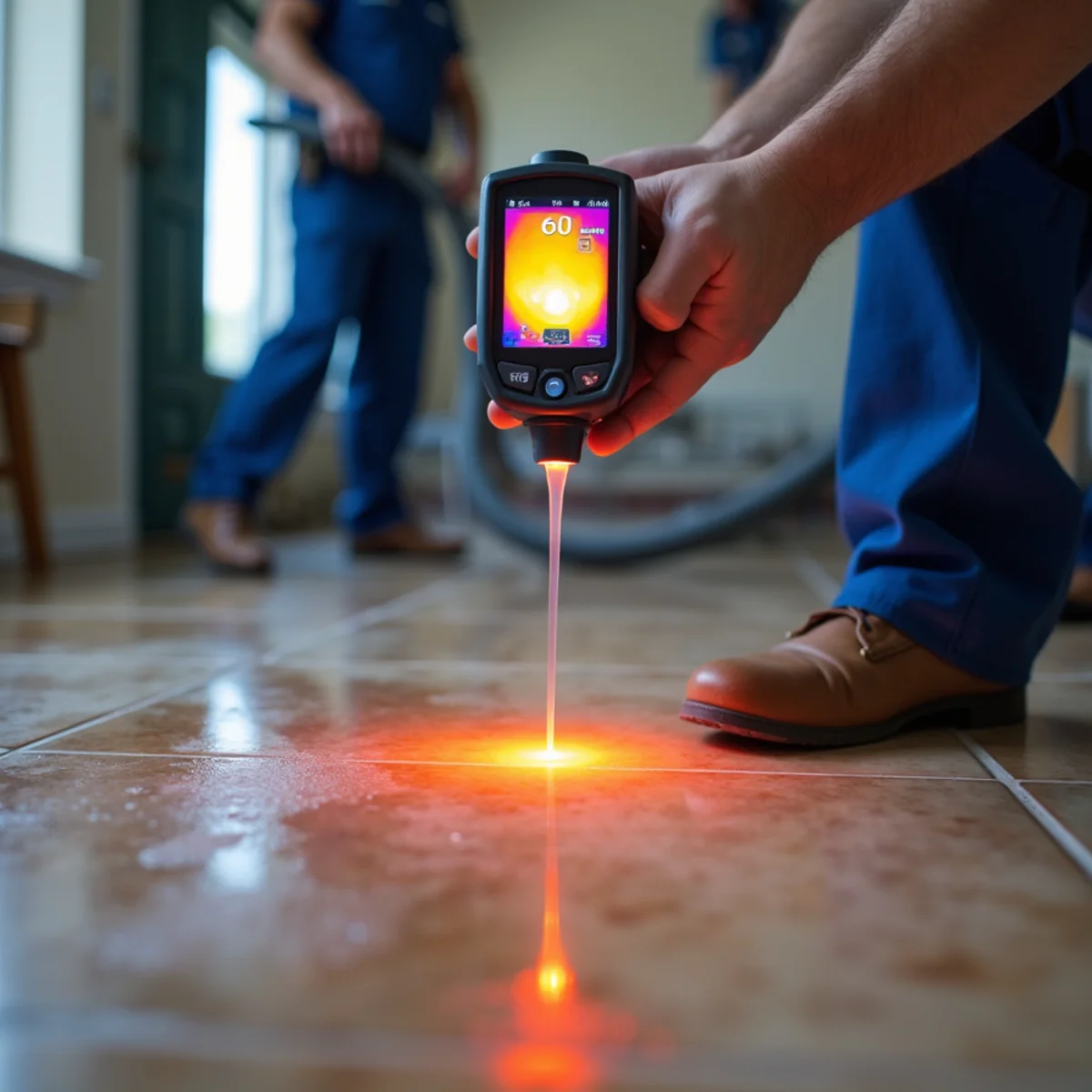
Finding the leak without demolishing your floor is the whole game. We use electronic listening equipment, pressure testing, and thermal imaging to pinpoint where the line is failing under the slab, so any access is precise instead of exploratory. Locating it accurately is what keeps a slab leak from turning into a torn-up floor across the whole room.
Call our 24/7 line and a real person answers, ready to send a certified crew toward Buena Park within about 60 minutes. We confirm the leak, coordinate the repair with a plumber, and dry out everything the water reached, from the slab and flooring to the base of your walls. We document each step for your insurance and keep you in the loop the whole way.
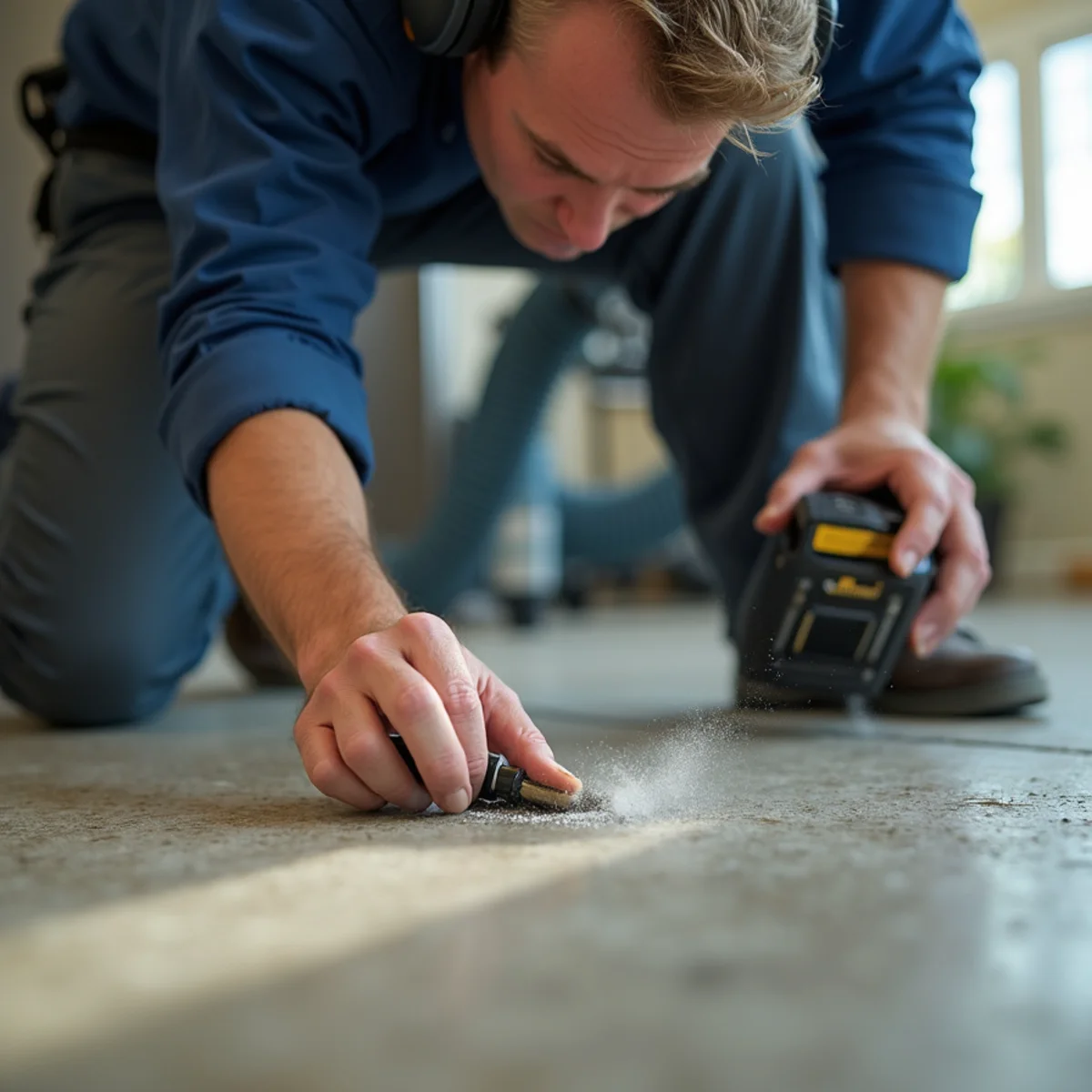
Signs You Need Slab Leak Emergency Repair in Buena Park
Water damage rarely announces itself politely. Here's what tends to signal that it's time to call a professional:
- A warm spot on the floor from a leaking hot water line below
- Water bills climbing with no change in how you use water
- The sound of running water when everything is shut off
- Cracked, loose, or lifting tile and flooring over the slab
- Damp or musty baseboards with no visible source above
- Low water pressure paired with a wet floor
- The water meter dial moving while no water is in use
What's Included in Our Slab Leak Emergency Repair
Slab Leak Emergency Repair with us is a complete, done-for-you service — not a partial fix that leaves you chasing other contractors. Here's what a typical job includes:
- Emergency response for water surfacing through the slab
- Electronic leak detection to pinpoint the slab break
- Extraction of water pooling on floors above the slab
- Drying of the slab, subfloor, and lower wall sections
- Moisture readings across the concrete to map saturation
- Coordination with plumbers on a reroute or spot repair
- Slab leak damage documented for your insurer
Why This Matters in Buena Park & North OC
Buena Park is slab-leak country. So many homes here date to the 1950s and 60s and sit on concrete slabs with copper supply lines run underneath, and that combination is exactly what produces slab leaks as the plumbing ages. Add the region's hard water, which corrodes copper from the inside, and the failures we find under these floors are less a matter of if than when.
Hot water lines tend to fail first, since heat and pressure accelerate the corrosion, which is why a warm patch on a tile floor is one of the classic local warning signs. We locate these under-slab failures across Buena Park and neighboring Fullerton, Cypress, and La Palma, where the housing stock and the plumbing are much the same vintage.
Because a slab leak can run undetected for weeks, the water damage side is often bigger than homeowners expect once we map it. Our job is to find the leak precisely, dry the slab and the wall bases thoroughly, and make sure the moisture that spread sideways under your flooring is gone before we call it done.
Our Slab Leak Emergency Repair Process
We confirm and pinpoint the leak first, coordinate the repair, then dry the slab, flooring, and wall bases the water reached.
- 1
Emergency Contact & Rapid Assessment
A real person answers your call 24/7 — never a voicemail. We ask a few quick questions to gauge severity, then dispatch a crew immediately. While you wait, we'll walk you through shutting off the water and safely documenting the damage for your insurer.
- 2
Water Extraction
Our technicians arrive with truck-mounted and portable extraction units to pull out standing water fast — the single biggest factor in limiting damage. We move furniture and belongings to dry areas and stop the spread before it reaches new rooms.
- 3
Drying & Dehumidification
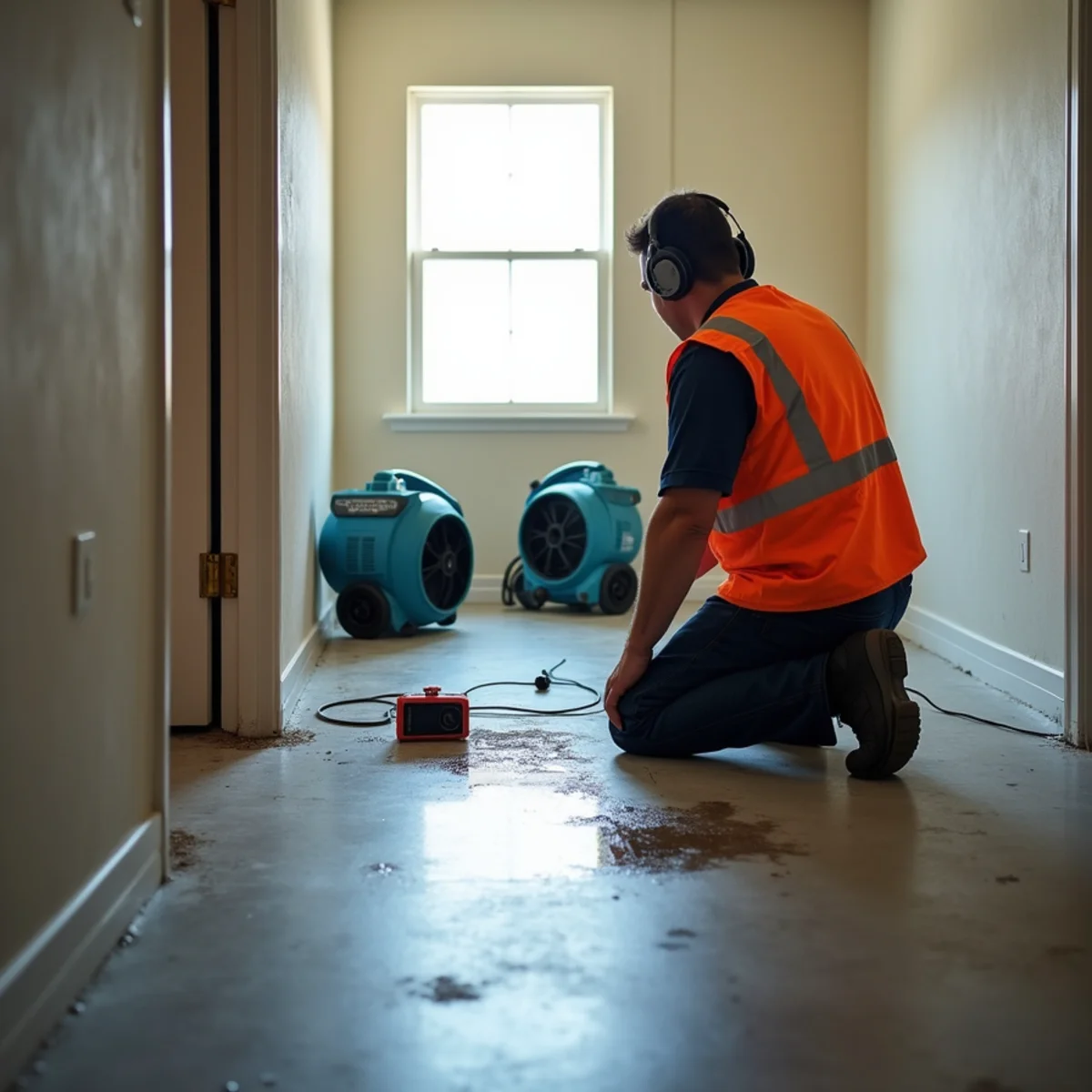
We position industrial air movers and dehumidifiers to dry structural materials from the inside out, then monitor moisture daily with professional meters and thermal imaging so hidden dampness behind walls and under floors doesn't turn into mold.
- 4
Cleaning & Sanitizing
Every affected surface is cleaned with antimicrobial and anti-fungal treatments. For gray- and black-water losses we follow strict IICRC S500 containment, PPE, and disposal protocols to keep your home safe.
- 5
Restoration & Reconstruction
Once your property is dry, we repair or replace drywall, flooring, cabinetry, and paint — and put it back the way it was. One company handles the whole job, from the first extraction to the final coat of paint, so you're never juggling three contractors.
Water Damage Categories We Handle
Not all water is equal. During our assessment we classify the loss so it's treated safely and correctly — this also matters for your insurance claim.
| Category | Typical Sources | How We Handle It |
|---|---|---|
| Category 1 — Clean Water | Broken supply line, sink overflow, rainwater | Fast extraction, drying, and sanitizing. Porous materials like carpet and drywall can often be saved if they're dried within 24–48 hours. |
| Category 2 — Gray Water | Washing machine or dishwasher discharge, toilet overflow (urine only) | Extraction, removal of contaminated porous materials, antimicrobial treatment, and enhanced drying. Technicians work in full PPE. |
| Category 3 — Black Water | Sewage backup, floodwater, toilet overflow with solids | Full containment, removal and disposal of all affected porous materials, heavy-duty sanitization, HEPA filtration, and full PPE per IICRC S500. |
What Affects the Cost of Slab Leak Emergency Repair
We give you a clear, upfront estimate after a free on-site assessment — no guessing, no fake numbers. The final figure depends on factors like:
- How long the leak ran before it was detected
- The extent of moisture that spread under flooring and into walls
- The flooring type over the slab and how it must be dried or accessed
- Whether the failed line is a hot or cold supply under the slab
- The drying equipment and time needed to dry concrete and framing
- Access required to reach and confirm the leak location
- After-hours dispatch when the leak becomes an overnight emergency
Because we document everything to insurer standards, most of this is typically handled through your homeowner's claim — and we bill your insurance directly.
Need help right now?
Certified crews on standby, 24/7. We'll be there fast.
Slab Leak Emergency Repair FAQs
We combine electronic acoustic listening equipment, line pressure testing, and thermal imaging to hear and see where water is escaping beneath the slab. That lets us mark the spot precisely instead of guessing. Accurate location is what keeps any needed access small rather than tearing up a whole floor.
It can be, because the water is doing hidden work the whole time it runs. Left alone it saturates flooring and wall framing, drives up your bill, and creates the damp conditions mold needs. Even a slow slab leak is worth acting on quickly, and a fast one absolutely qualifies as an emergency.
Not always. Depending on where the leak is, a plumber may reroute the affected line rather than open the slab, or make a small, precise access point once we have pinpointed the spot. Because we locate the leak accurately first, any work is targeted. We will explain the options before anything is opened up.
Many policies cover the resulting water damage and the access needed to reach the leak, even when the pipe repair itself is treated separately, though coverage varies by policy. We document the leak and the damage thoroughly and can bill your insurer directly where allowed. During the free inspection we will give you a straight answer about what to expect.
A few signs point under the foundation: a warm or damp spot on the floor, a water bill that jumped for no reason, the sound of running water when everything's off, or new cracks in the slab. These are common in our 1950s and 60s tract homes with aging copper lines under the concrete. We locate the leak with acoustic equipment and thermal imaging before anyone touches the slab, so the repair is targeted rather than exploratory.