Not all toilet overflows are the same, and the difference decides how we handle it. A clean overflow, the tank or supply line letting go or a clog caught before the bowl's contents go over, is a water problem. A sewage backup, where waste comes up through the toilet or a floor drain, is a health hazard that has to be treated as contaminated from the first minute.
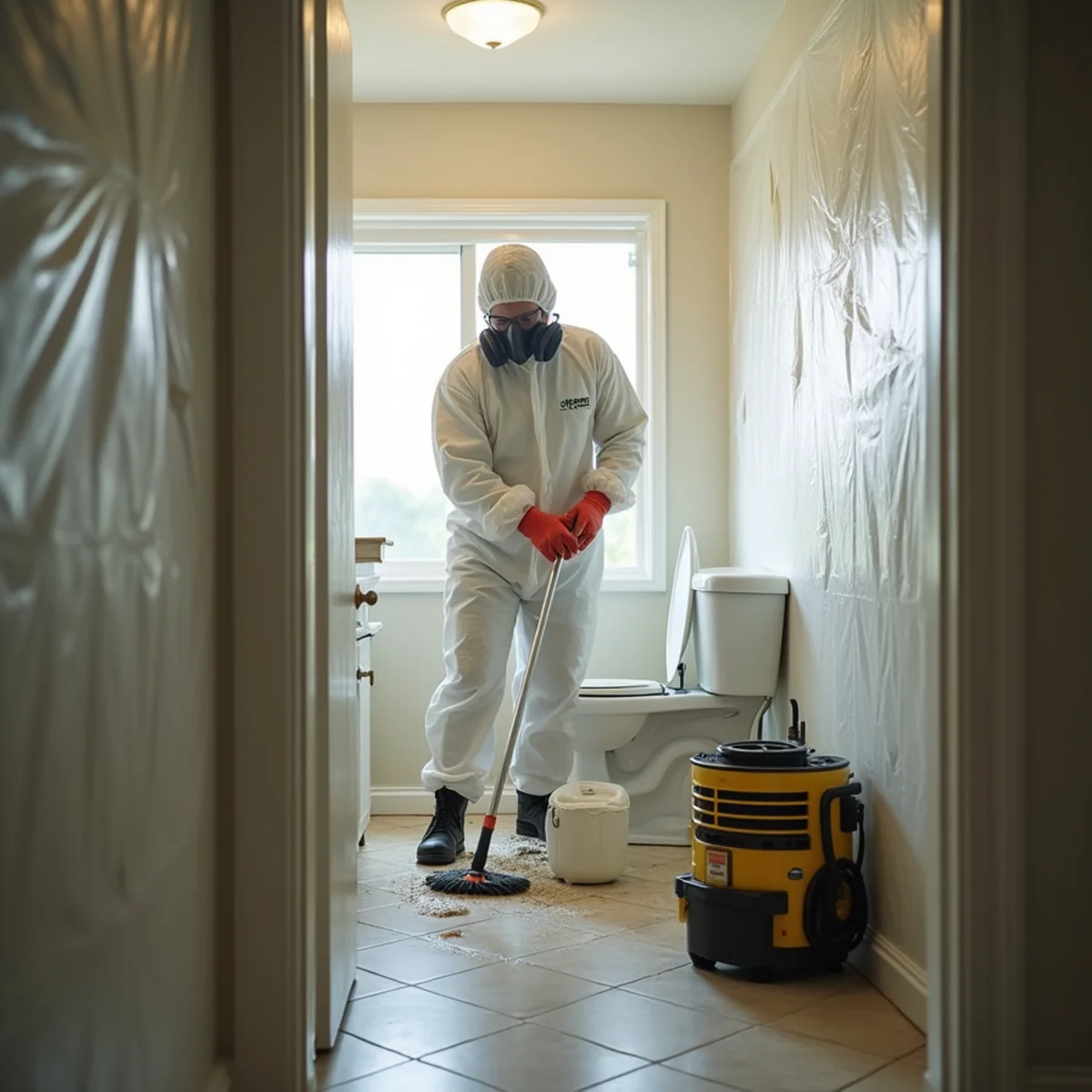
We handle both, and we treat every backup that involves the bowl's contents or a main-line back-up as Category 3 water under the IICRC S500 standard, the black-water classification. That means it isn't just extracted and dried. It's removed, the area is cleaned and disinfected, and porous materials that soaked it up, like carpet pad and swollen baseboard, are often removed rather than salvaged, because you can't fully sanitize them in place.
Time and safety come first. Keep people and pets out of the affected area, don't run water that drains through the blocked line, and shut off the toilet's supply valve if it is still running. Then reach our 24/7 line. We arrive with extractors, containment, and hospital-grade disinfectants, and we protect the clean parts of your home from cross-contamination while we work.
We are IICRC-certified in water restoration and applied structural drying, licensed and insured, and locally owned. We document the loss thoroughly, sanitize to a verified standard, and bill approved insurance claims directly.
Signs You Need Toilet Overflow & Sewage Backup in Buena Park
Water damage rarely announces itself politely. Here's what tends to signal that it's time to call a professional:
- Water or waste spilling over the bowl rim onto the floor
- Sewage backing up through the toilet or a nearby floor drain
- A strong sewage odor in the bathroom or adjoining rooms
- Multiple drains gurgling or backing up at once
- Water spreading under the vanity or into the hallway
- Stained, soft, or lifting flooring around the toilet base
- A wet, spongy subfloor or a stain on the ceiling below
What's Included in Our Toilet Overflow & Sewage Backup
Toilet Overflow & Sewage Backup with us is a complete, done-for-you service — not a partial fix that leaves you chasing other contractors. Here's what a typical job includes:
- Category assessment of the overflow water for contamination
- Technicians in PPE for any black-water overflow
- Extraction of water from the bathroom and adjoining rooms
- Removal of contaminated flooring and wax-ring debris
- Drying of the subfloor and lower wall framing
- Disinfectant and antimicrobial treatment on all surfaces
- The overflow damage documented for your insurer
Why This Matters in Buena Park & North OC
In Buena Park's older tract homes, the sanitary lines are decades old, and tree roots and accumulated grease find the joints in aging clay and cast-iron pipe. That is what turns a routine flush into a main-line backup that pushes waste up through the lowest fixture in the house. If you have noticed several drains acting up together, the blockage is usually downstream in the main, not in the toilet itself.
Multi-family buildings raise the stakes. A backup in a shared sewer line can surface in a ground-floor unit even when the blockage is not theirs, and an overflow in an upstairs bathroom sends contaminated water straight into the ceiling and walls of the home below. We contain the affected area, clean and disinfect both units when needed, and document everything for the property manager and each insurer involved.
Our Toilet Overflow & Sewage Backup Process
Here's how we clean, disinfect, and dry after a toilet overflow or sewage backup, safely and by the S500 standard.
- 1
Emergency Contact & Rapid Assessment
A real person answers your call 24/7 — never a voicemail. We ask a few quick questions to gauge severity, then dispatch a crew immediately. While you wait, we'll walk you through shutting off the water and safely documenting the damage for your insurer.
- 2
Water Extraction
Our technicians arrive with truck-mounted and portable extraction units to pull out standing water fast — the single biggest factor in limiting damage. We move furniture and belongings to dry areas and stop the spread before it reaches new rooms.
- 3
Drying & Dehumidification
We position industrial air movers and dehumidifiers to dry structural materials from the inside out, then monitor moisture daily with professional meters and thermal imaging so hidden dampness behind walls and under floors doesn't turn into mold.
- 4
Cleaning & Sanitizing
Every affected surface is cleaned with antimicrobial and anti-fungal treatments. For gray- and black-water losses we follow strict IICRC S500 containment, PPE, and disposal protocols to keep your home safe.
- 5
Restoration & Reconstruction
Once your property is dry, we repair or replace drywall, flooring, cabinetry, and paint — and put it back the way it was. One company handles the whole job, from the first extraction to the final coat of paint, so you're never juggling three contractors.
Water Damage Categories We Handle
Not all water is equal. During our assessment we classify the loss so it's treated safely and correctly — this also matters for your insurance claim.
| Category | Typical Sources | How We Handle It |
|---|---|---|
| Category 1 — Clean Water | Broken supply line, sink overflow, rainwater | Fast extraction, drying, and sanitizing. Porous materials like carpet and drywall can often be saved if they're dried within 24–48 hours. |
| Category 2 — Gray Water | Washing machine or dishwasher discharge, toilet overflow (urine only) | Extraction, removal of contaminated porous materials, antimicrobial treatment, and enhanced drying. Technicians work in full PPE. |
| Category 3 — Black Water | Sewage backup, floodwater, toilet overflow with solids | Full containment, removal and disposal of all affected porous materials, heavy-duty sanitization, HEPA filtration, and full PPE per IICRC S500. |
What Affects the Cost of Toilet Overflow & Sewage Backup
We give you a clear, upfront estimate after a free on-site assessment — no guessing, no fake numbers. The final figure depends on factors like:
- Whether the water is clean, gray, or contaminated black water
- Square footage the overflow or backup reached
- Amount of porous material that must be removed and replaced
- Level of disinfection and antimicrobial treatment required
- Whether the subfloor or the ceiling below was saturated
- Containment needed to protect unaffected areas
- Days of drying and post-cleaning verification
Because we document everything to insurer standards, most of this is typically handled through your homeowner's claim — and we bill your insurance directly.
Need help right now?
Certified crews on standby, 24/7. We'll be there fast.
Toilet Overflow & Sewage Backup FAQs
If it came up through the toilet from the drain line, or the bowl's contents went over, treat it as contaminated regardless of color. Category 3 water carries bacteria you can't see. Keep people and pets off it and let us handle the cleanup and disinfection with the right protection.
Hard, non-porous flooring like tile can usually be cleaned and disinfected in place. Porous materials that absorbed contaminated water, such as carpet pad, some baseboards, and saturated drywall, typically have to be removed, because sanitizing them in place is not reliable. We remove only what the standard requires.
Our work is the cleanup, disinfection, and drying. Clearing a main-line clog or root intrusion is a plumber's job, and we coordinate closely so the line is opened before we finish, and we can recommend one. Cleaning up before the blockage is cleared just invites a second backup.
Standard California homeowner policies often exclude sewer or drain backup unless you carry a specific backup endorsement, and many homeowners don't realize they need it. We document the source and category carefully so your claim is accurate, and bill directly when coverage applies.
It depends on the source. If it's clean water backing up from the supply side, it's a lower-risk category; if it came up from the drain or contains waste, it's Category 3 black water and has to be handled as a biohazard. To be safe, we treat any overflow with waste as contaminated, removing affected porous materials, disinfecting hard surfaces with an antimicrobial, and drying the area properly.