In an apartment or condo, water rarely stays in one unit. A dishwasher that overflows on the third floor becomes a stained ceiling on the second and a soaked wall on the first. That's what makes multi-family water damage different — one leak, several households, and often more than one insurance policy involved.
We handle water damage in apartments, condos, townhomes, and HOA-managed communities across Buena Park, where roughly a third of all housing is multi-family. When you call our 24/7 line, we're set up to work in occupied buildings: coordinating access to multiple units, keeping residents informed, and drying without turning the whole complex upside down.
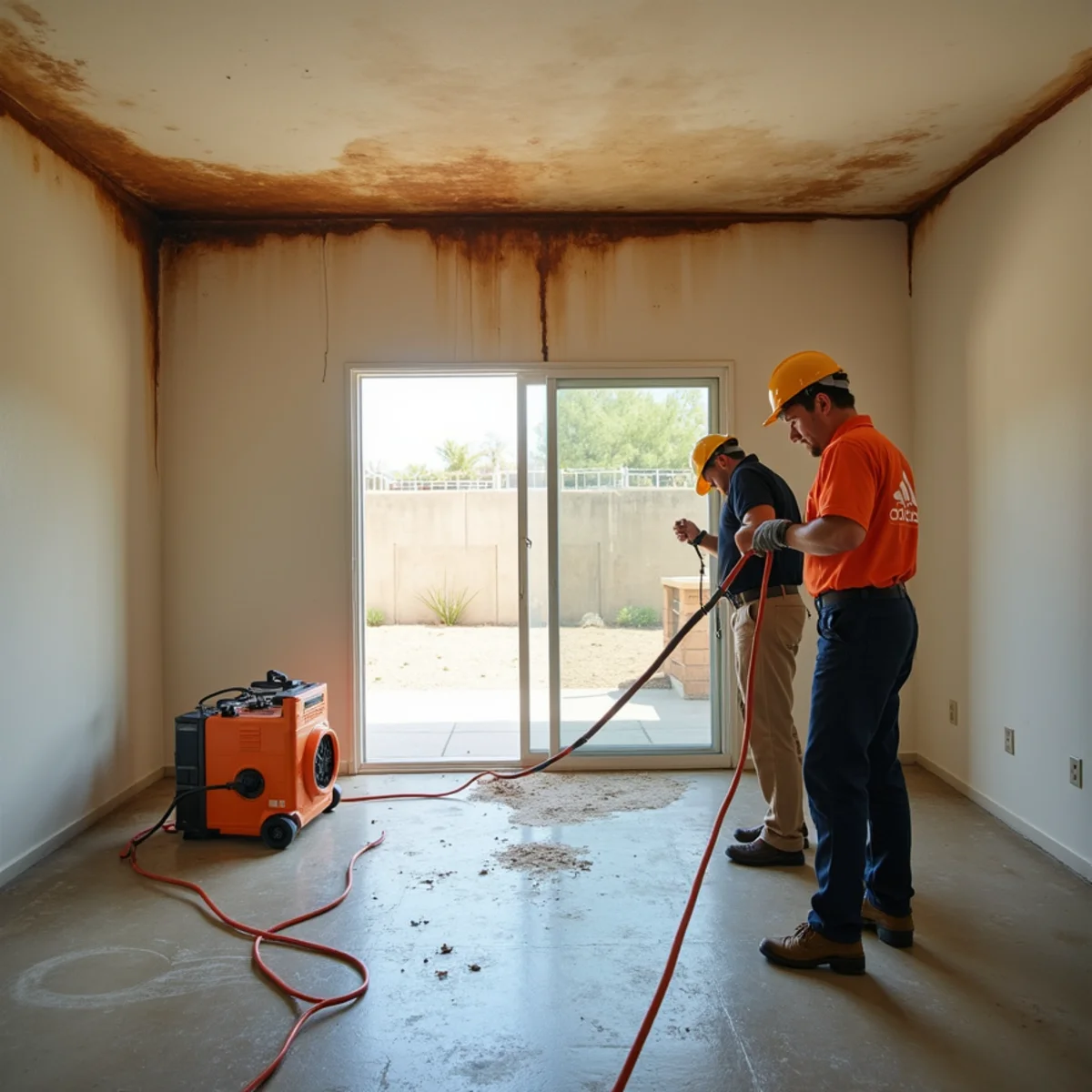
Speed matters even more here. Water travels between floors through wall cavities and shared plumbing chases, so a delay of a few hours can turn a single wet unit into three. We extract quickly, trace the moisture into adjoining units and common walls, and dry the whole affected path — not just the room where someone first noticed a drip.
We also keep the paperwork clean for everyone involved — the tenant, the owner, the HOA, and the insurers — with clear documentation of the source, the spread, and the drying.
Signs You Need Multi-Family & Apartment Water Damage in Buena Park
Water damage rarely announces itself politely. Here's what tends to signal that it's time to call a professional:
- A leak from an upstairs unit staining or collapsing the ceiling in the unit below.
- Water tracking down a shared wall or plumbing chase between stacked units.
- A single overflowing tub, toilet, or appliance affecting two or three apartments at once.
- Disputes over who's responsible — tenant, landlord, or HOA — while the damage keeps spreading.
- Occupied units where residents need to stay put while drying equipment runs.
- Common areas, hallways, and stairwells soaked by a supply-line or roof failure.
- Recurring musty odors in ground-floor or garden units where moisture lingers.
- A slab or supply-line leak under a ground-floor unit wicking into multiple walls.
What's Included in Our Multi-Family & Apartment Water Damage
Multi-Family & Apartment Water Damage with us is a complete, done-for-you service — not a partial fix that leaves you chasing other contractors. Here's what a typical job includes:
- Rapid response for upstairs and downstairs unit leaks
- Extraction in the affected unit and any units below
- Air movers and dehumidifiers sized to each affected unit
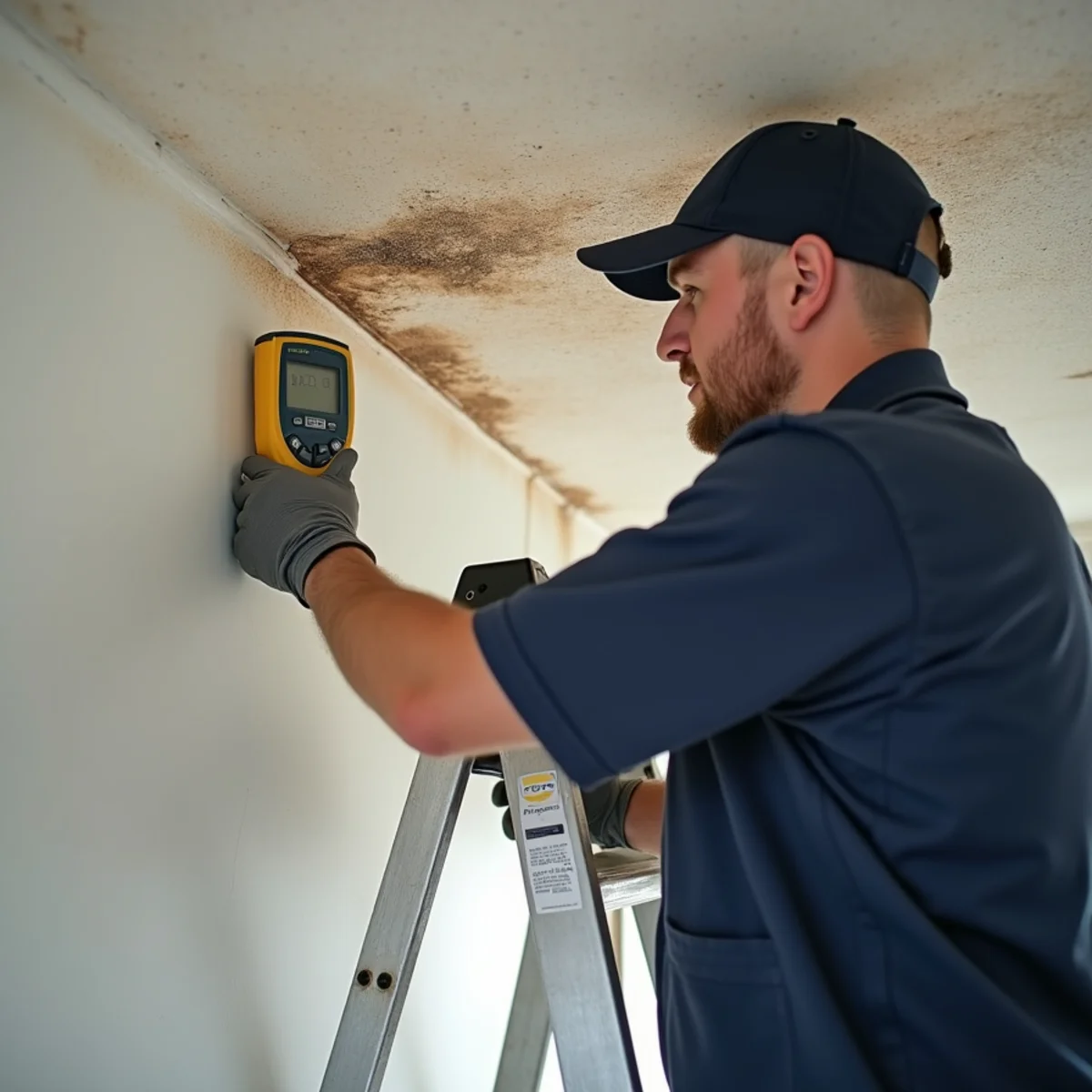
- Shared walls and ceilings between units moisture-tested
- Coordination with tenants, landlord, and property manager
- Antimicrobial applied to wet drywall between units
- Separate documentation per unit for multiple claims
Why This Matters in Buena Park & North OC
About 32.8% of Buena Park's housing is multi-family — apartments, condos, and townhomes clustered near the Beach Boulevard corridor, the Source OC, and the neighborhoods around Knott's Berry Farm. Many of these buildings stack units directly over one another and share plumbing walls, which is exactly the layout where a small leak becomes a multi-unit event.
The older complexes bring the same aging-copper and hard-water issues we see in the area's single-family homes, so pinhole leaks inside shared walls are common. When one shows up, we check the units above, below, and beside the source, because moisture in multi-family construction almost never stays where it started.
We serve apartment and condo communities throughout Buena Park and neighboring Fullerton, Anaheim, Cypress, La Palma, and Stanton, with a 60-minute response target from our Orangethorpe Avenue base. For managers and owners, that quick arrival is often what keeps a one-unit claim from becoming a building-wide one.
Our Multi-Family & Apartment Water Damage Process
In multi-family buildings we work the whole moisture path, not just the unit that called — here's how.
- 1
Emergency Contact & Rapid Assessment
A real person answers your call 24/7 — never a voicemail. We ask a few quick questions to gauge severity, then dispatch a crew immediately. While you wait, we'll walk you through shutting off the water and safely documenting the damage for your insurer.
- 2
Water Extraction
Our technicians arrive with truck-mounted and portable extraction units to pull out standing water fast — the single biggest factor in limiting damage. We move furniture and belongings to dry areas and stop the spread before it reaches new rooms.
- 3
Drying & Dehumidification
We position industrial air movers and dehumidifiers to dry structural materials from the inside out, then monitor moisture daily with professional meters and thermal imaging so hidden dampness behind walls and under floors doesn't turn into mold.
- 4
Cleaning & Sanitizing
Every affected surface is cleaned with antimicrobial and anti-fungal treatments. For gray- and black-water losses we follow strict IICRC S500 containment, PPE, and disposal protocols to keep your home safe.
- 5
Restoration & Reconstruction
Once your property is dry, we repair or replace drywall, flooring, cabinetry, and paint — and put it back the way it was. One company handles the whole job, from the first extraction to the final coat of paint, so you're never juggling three contractors.
What Affects the Cost of Multi-Family & Apartment Water Damage
We give you a clear, upfront estimate after a free on-site assessment — no guessing, no fake numbers. The final figure depends on factors like:
- How many units and common areas the water reached.
- The water category, and whether a sewage backup or contamination is involved.
- The distance moisture traveled through shared walls, floors, and ceilings.
- Occupancy — drying around residents who stay in place versus empty units.
- The materials affected across units, from ceilings and drywall to shared subfloors.
- Coordination among tenant, owner, HOA, and multiple insurers.
- Whether reconstruction of ceilings, walls, or flooring follows the drying.
Because we document everything to insurer standards, most of this is typically handled through your homeowner's claim — and we bill your insurance directly.
Need help right now?
Certified crews on standby, 24/7. We'll be there fast.
Multi-Family & Apartment Water Damage FAQs
Notify your landlord or property manager right away so they can stop the source, then call us on our 24/7 line to start extraction. The faster we dry it, the less the damage spreads. We can also coordinate directly with your manager or HOA once we're on site.
That depends on the source and on your lease and HOA documents, and it's often shared between policies. Our job is to document the loss clearly — where it started, how far it spread, and what we dried — so the responsible parties and their insurers can sort out coverage without guesswork.
Often they can stay. We contain the work area, position air movers and dehumidifiers to keep pathways clear, and manage noise and access. If a unit is unsafe or heavily contaminated, we'll say so plainly and help coordinate with the manager on next steps.
We use thermal imaging and moisture meters to trace water through shared walls, ceilings, and floors, then confirm readings inside each affected unit. Multi-family construction hides moisture in cavities, so we check adjoining units rather than assuming the damage stopped at one wall.
Yes. We work with many local managers and boards, provide documentation for each event, and can flag patterns — like repeated pinhole leaks in older copper — so the community can plan repairs instead of reacting to one emergency at a time.
This is common in multi-family buildings, and it takes coordination more than anything. We work with the landlord, HOA, or property manager, who can authorize access to the source unit so we can stop the leak and dry both sides of the shared wall or ceiling. If we cannot get in right away, we start on the units we can reach and use moisture meters to track how far the water traveled. Water that is not dried on both sides simply becomes the mold problem next door, so reaching the source unit matters.